This lesson
is fitting for the 9th grade of ESL learners in the Norwegian
school, and the content area is Social Studies.
Language objectives
- Create a
blog at blogger.com
- Gather
information on your chosen English-speaking country, and use this information
to make 4 blog postings. The blog should include:
- Population
graphs
- Different types
of maps (geographic, demographic etc.)
- Written texts
with information about the country
- Publish the
4 blog postings
Content objectives from the Norwegian curriculum:
This lesson
focuses on different English-speaking countries in the world, their geography
and population. A relevant competence aim from the English curriculum after
year 10 is to enable the students to “use different situations, working methods
and learning strategies to develop one’s English-language skills”
(Utdanningsdirektoratet, 2013a). Relevant competence aims from the Social Studies
subject curriculum after year 10 are to enable the pupils to “locate and
document overviews of main geographic characteristics of the world and compare
different countries and regions, and compare size, structure and growth of
populations and analyse population trends, urbanisation and migration in modern
times” (Utdanningsdirektoratet, 2013b).
Relevant website:

Lesson plan
In the beginning of this lesson, the teacher starts a discussion about social media – what kinds of social media do we use today? What do we write on these medias? Are there different kinds of users (“pink”, historic, news related, sports related etc.)? The students sit in pairs and discuss before the discussion is in plural. The teacher also needs a world map, either a roll-up or digital on the SmartBoard. Turns the discussion over to English social media, and how English blog/Instagram/twitter posts can be read throughout the world. Uses the map to get the students to name English-speaking countries. The teacher will also name some of those that don’t come up. This part of the lesson will take about 15 minutes.
After the intro to the lesson, the students get the main task presented. They are, in groups of 4, to make a blog at https://www.blogger.com, and make 4 blog postings. The blog is going to be about one English-speaking country of their choice, and should include facts about geographic and population (see the Language objectives). It is important to tell the students that this is a proper blog; it is available for anyone on the internet. All the students need to have computers, and atlases should also be available. The teacher should assist and guide the students while they work, and give them advice if needed. It is also important to make note that the students should coordinate within their groups, they don’t need to work on everything together, and they need to include their sources! The teacher also has the opportunity to assess the students while they work. This main part of the lesson is set to take 60 minutes.
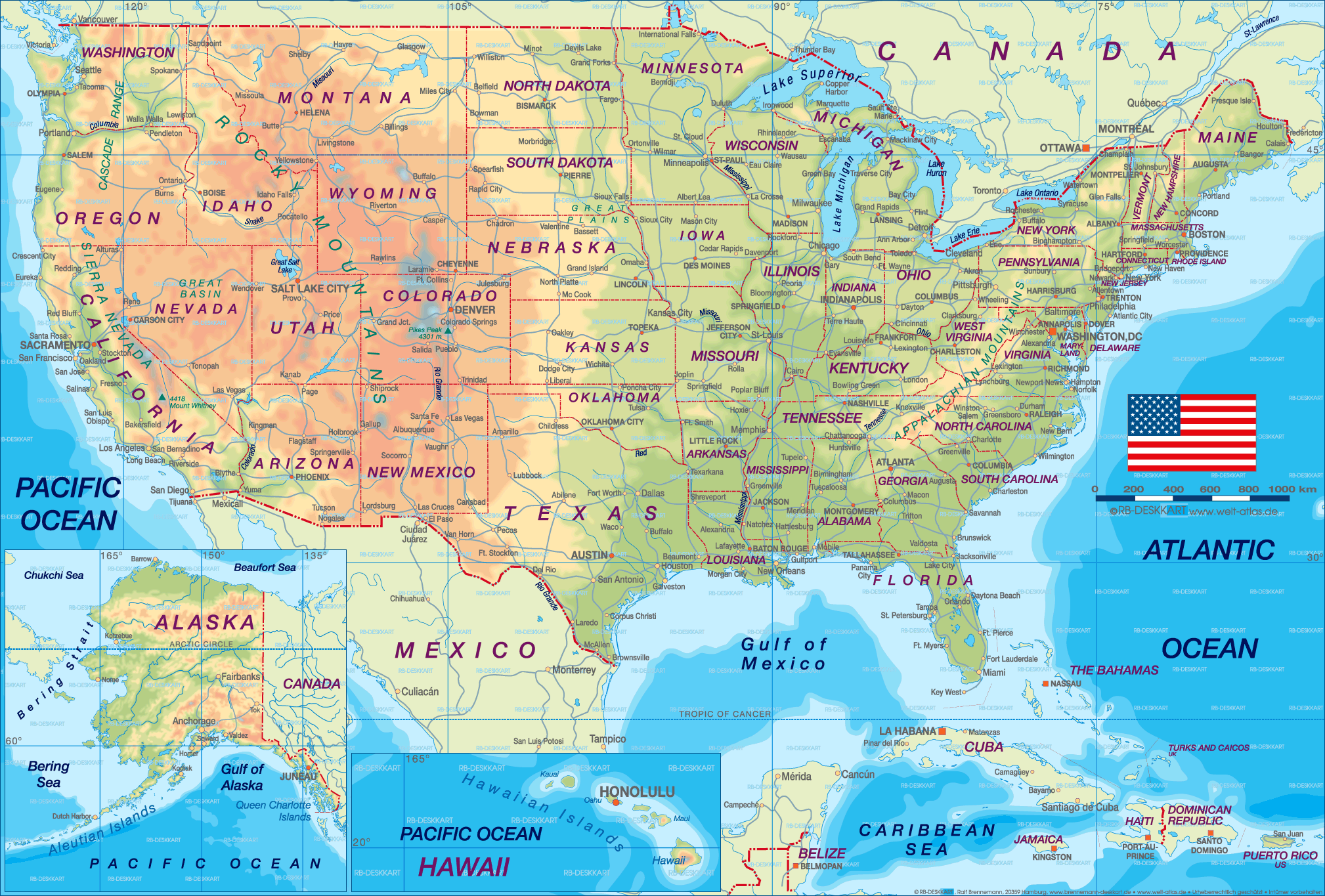
In the final part of the lesson, when the blog postings should be posted, the teacher will show one posting from each group, and the class as well as the teacher will give feedback on the blogs. What have each group done well, and what may they improve later? This is also an opportunity for the teacher to see what each group have created. The final part is set to take about 15 minutes.
Assessment and reflection
The students might know more about blogging and have great ideas to how they can design and model their blogs that I do not have knowledge about. Using technology that is close to their own realities will hopefully make this task engaging, and this is a task that should be fairly easy to differentiate by giving specific parts of the task to specific students. As to the assessment of this task, the teacher may see what sources the students use, but checking that all the groups have included what they should may be difficult to do in class. The teacher probably has to do this after class has ended. It is, of course, also important that the students take responsibility for their process and the end result of the blog. The students need to cooperate with their groups to work together and to finalize their blog.
I chose to use blogger.com, because it is a really good platform for posting texts, and the students can easily access their blogs from home. It is also easy for students to comment on each others blogs, and when commenting, their name/blog name will show as the "commentator". This means they cannot post rude, anonymous comments on other blogs. This helps to make the school and school activities a place for a safe learning environment. They may not "troll" on other students blogs. The website also allows parents and others to see their work without logging into a special website, so the students have easy access to showing off their work to their family. Hopefully this also means they will take the task seriously and work well with the task.
I chose to use blogger.com, because it is a really good platform for posting texts, and the students can easily access their blogs from home. It is also easy for students to comment on each others blogs, and when commenting, their name/blog name will show as the "commentator". This means they cannot post rude, anonymous comments on other blogs. This helps to make the school and school activities a place for a safe learning environment. They may not "troll" on other students blogs. The website also allows parents and others to see their work without logging into a special website, so the students have easy access to showing off their work to their family. Hopefully this also means they will take the task seriously and work well with the task.
References:
Utdanningsdirektoratet. (2013a). English subject curriculum (ENG1-03). Retrieved from http://www.udir.no/kl06/ENG1-03?lplang=eng
Utdanningsdirektoratet. (2013b). Social Studies subject curriculum (SAF1-03). Retrieved from http://www.udir.no/kl06/SAF1-03?lplang=eng

Ingen kommentarer:
Legg inn en kommentar